A Trump-Linked Bank Just Won Preliminary Approval. What Happens if It Needs a Bailout?

A Trump-backed crypto venture has cleared a key regulatory hurdle, setting up a debate over banking oversight, conflicts of interest, and who bears the risk when financial institutions run into trouble.

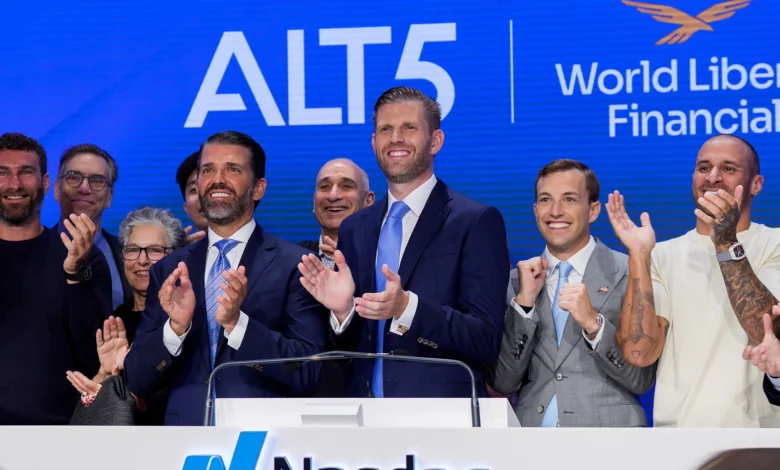
World Liberty Financial and ALT5 Sigma ring the Nasdaq Stock Market opening bell. Photo:
President Donald Trump’s family just got one step closer to operating a bank.
The Office of the Comptroller of the Currency (OCC) in mid-August extended preliminary approval to World Liberty Trust Company to seek out a bank charter. WLTC is linked to World Liberty Financial, a decentralized finance platform backed by the Trump family.
WLTC wouldn’t operate as a traditional bank does since it would focus on crypto, specifically issuing a dollar-backed stablecoin called USD1 and allowing banking clients to redeem USD1 for American dollars. This departs from traditional banking models which primarily focus on deposits. The OCC made clear that USD1 is neither considered a deposit nor insured by the government, as underlined by the GENIUS Act, the 2025 law that set up a regulatory framework for stable coins.
If the Bank’s stablecoin activities do not comply
“If the Bank’s stablecoin activities do not comply with the GENIUS Act and implementing regulations, the condition requires the Bank to cease or divest of such activities,” the OCC wrote in its decision. “The OCC has no indication that the Bank will not be able to comply with the GENIUS Act.”
The decision drew critique from Democratic lawmakers like Sen. Elizabeth Warren (D-MA), who argued that Trump just became the first to “approve, operate, and supervise his own bank.” The OCC in its decision acknowledged concerns around conflicts of interest regarding the Trump family, maintaining that the decision was issued by OCC career staff.
The daily digest for entrepreneurs and business leaders
An Inc.com Featured Presentation
It wouldn’t be the first time the president has tested the powers of the executive branch. Anyone who owns a bank and oversees regulatory agencies has a “fundamental and dangerous conflict of interest,” a Professor of Corporate Law at the University of Minnesota Law School
A criminal statute 18 USC 208 makes
“A criminal statute 18 USC 208 makes it a crime for any federal officer or employee to be involved with regulating banks while owning any part of a bank,” says Painter, who also served as the chief White House ethics lawyer during the Bush Administration. “This statute technically does not apply to the president, but every other president since the Civil War has avoided such conflicts, and Donald Trump should as well.”
The current deregulatory environment, combined with public debt and inflation, is placing great strain on the U.S. financial system, says Philip Nichols, a professor of legal studies and business ethics at the University of Pennsylvania.
Source: www.inc.com